Czech Police Charge 15 Over 'Decentralized' Crypto Casino That Was Allegedly Very Centralized

Czech authorities have charged 15 people in connection with BETFIN, a crypto casino that investigators say operated illegally and brought in around $12 million, according to Decrypt.
The platform was marketed as decentralized, a word that in crypto usually means no single party is in charge. Investigators say the reality was different: BETFIN was allegedly run centrally, which is a bit like advertising a one-man band as a community orchestra.
Authorities also allege the casino padded its player numbers with bots. Fake users can make a gambling site look busy and popular, which can help persuade real people to sign up and spend money.
The material available does not detail the charges in full, the identities of those accused, or how the case will proceed, so those questions remain open. The $12 million figure is what investigators say was made illegally, and the accusations have yet to be tested in court.
The case lands on a familiar fault line. Crypto projects often claim decentralization as a selling point, but regulators tend to look at who actually controls the operation, not at the branding. When a gambling business lacks the required licence, calling it a protocol does not change how the law sees it.
Why it matters
Regulators are showing they will look past 'decentralized' labels and judge crypto businesses by who really runs them. For users, a platform's claims about fairness and popularity may be unreliable, especially when it lacks a licence and your money is on the line.
Key points
- Czech authorities charged 15 people over the BETFIN crypto casino.
- Investigators say it was run centrally despite being billed as decentralized.
- Bots allegedly inflated player numbers, and about $12 million was made illegally.
Written by the PixelContent newsroom from public reports. Original reporting: Decrypt.
Get the news that moves your money
Breaking news, market calls and the weirdest true stories in your inbox. Free.
No spam. Unsubscribe anytime.
More stories

Nvidia Brings Jensen Huang Back as CEO, Days After Board Said No Return
Nvidia's board reinstated Jensen Huang as CEO days after ruling out his return, citing input from senior U.S. officials on national security. Shares reportedly surged 26% premarket, according to Decrypt.

Bitcoin bounces 17% off $55K lows as Nvidia-fueled risk rally triggers $500M in liquidations
Bitcoin jumped about 17% from $55,000 lows to $64,500 as risk assets rallied on Nvidia CEO Jensen Huang's reinstatement, while over $500 million in crypto positions were liquidated in four hours, Cointelegraph reported.

Strategy Buys 457 Bitcoin While Spending $212M Buying Back Its Own Preferred Shares
Strategy bought 457 Bitcoin and spent $212 million repurchasing preferred shares, raising its buyback limit to $4 billion and authorizing up to $1 billion to move from its dollar reserve, Cointelegraph reported.
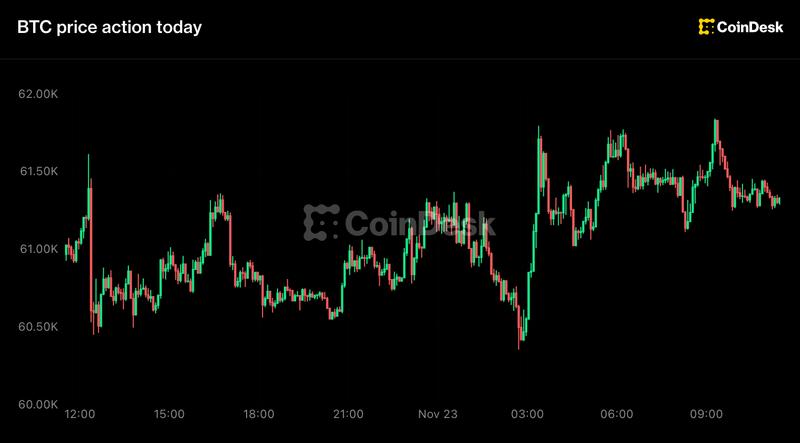
Bitcoin Bounces Back Above $61,000 After Weekend Dive to Two-Year Low
Bitcoin rebounded above $61,000 after a weekend drop to nearly $55,500, its lowest in over two years, as Nasdaq futures rose 3% and Nvidia rallied following an AI-driven stock rout.
Bitcoin Tops $63,000 and Nasdaq Jumps 6% as Nvidia Brings Jensen Huang Back
Bitcoin rose above $63,000 and the Nasdaq jumped 6% after Nvidia's board reinstated Jensen Huang as president, CEO and director, according to CoinDesk.

AI agents are swiping credit cards, and crypto wonders if it got left on read
Cointelegraph reports AI agents are already paying with credit cards, prompting questions about whether crypto, long pitched as machine-friendly money, will find a role in the emerging agent economy.
💬 Comments