Binance hackers launder $247 million through coinjoin mixers, Elliptic finds, with a possible China link

Hackers tied to a Binance breach have pushed about $247 million through mixing transactions meant to hide where the money came from, according to a CoinDesk report citing blockchain analytics firm Elliptic.
The transactions are known as coinjoins, a technique that pools coins from many users and sends them back out in a way that makes tracing individual funds much harder. Think of it as tossing marked banknotes into a crowded ball pit and asking investigators to find the same ones again.
Elliptic found that nearly all of these coinjoins were coordinated by an entity called Kruw. The activity took place during fixed daily hours, a regular pattern that Elliptic says suggests the funds may have been handed off to money launderers based in China.
The source material available to us is limited, so details such as how the Binance breach occurred, when it happened, and how the stolen funds are being tracked remain unclear. Neither Binance nor Kruw has been quoted in the information we have.
Even so, the finding shows how stolen crypto is often cleaned up. Attackers rarely cash out directly. They shuffle funds through mixers and intermediaries, then pass them to professional launderers who convert them into cash or other assets. Predictable schedules like the one Elliptic describes give analysts a thread to pull, since human-run operations tend to leave clock-like fingerprints.
Why it matters
Large-scale laundering of stolen crypto erodes trust in exchanges and invites tougher scrutiny of mixing tools. It also shows how analytics firms can trace patterns, which matters for anyone holding funds on centralized platforms.
Key points
- About $247 million was pushed through coinjoin mixing transactions.
- Elliptic says nearly all were coordinated by an entity called Kruw during fixed daily hours.
- The timing pattern suggests possible handoffs to China-based money launderers.
Written by the PixelContent newsroom from public reports. Original reporting: CoinDesk.
Get the news that moves your money
Breaking news, market calls and the weirdest true stories in your inbox. Free.
No spam. Unsubscribe anytime.
More stories

Nvidia Brings Jensen Huang Back as CEO, Days After Board Said No Return
Nvidia's board reinstated Jensen Huang as CEO days after ruling out his return, citing input from senior U.S. officials on national security. Shares reportedly surged 26% premarket, according to Decrypt.

Bitcoin bounces 17% off $55K lows as Nvidia-fueled risk rally triggers $500M in liquidations
Bitcoin jumped about 17% from $55,000 lows to $64,500 as risk assets rallied on Nvidia CEO Jensen Huang's reinstatement, while over $500 million in crypto positions were liquidated in four hours, Cointelegraph reported.

Strategy Buys 457 Bitcoin While Spending $212M Buying Back Its Own Preferred Shares
Strategy bought 457 Bitcoin and spent $212 million repurchasing preferred shares, raising its buyback limit to $4 billion and authorizing up to $1 billion to move from its dollar reserve, Cointelegraph reported.
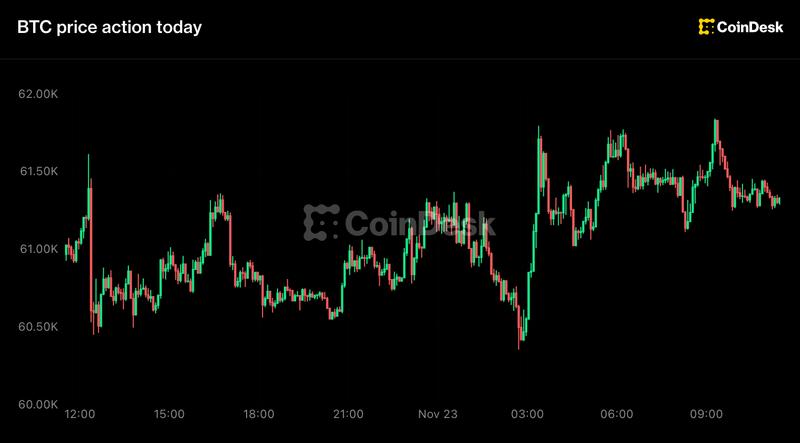
Bitcoin Bounces Back Above $61,000 After Weekend Dive to Two-Year Low
Bitcoin rebounded above $61,000 after a weekend drop to nearly $55,500, its lowest in over two years, as Nasdaq futures rose 3% and Nvidia rallied following an AI-driven stock rout.
Bitcoin Tops $63,000 and Nasdaq Jumps 6% as Nvidia Brings Jensen Huang Back
Bitcoin rose above $63,000 and the Nasdaq jumped 6% after Nvidia's board reinstated Jensen Huang as president, CEO and director, according to CoinDesk.

AI agents are swiping credit cards, and crypto wonders if it got left on read
Cointelegraph reports AI agents are already paying with credit cards, prompting questions about whether crypto, long pitched as machine-friendly money, will find a role in the emerging agent economy.
💬 Comments