ECB Preps to Take Tokenized Securities as Collateral, Targeting June 2027

The European Central Bank plans to let banks pledge more tokenized securities as collateral, according to Cointelegraph. The aim is to start accepting securities issued on platforms licensed under the EU's distributed ledger pilot program in June 2027.
In plain terms, collateral is the stuff banks hand over to the central bank in exchange for funding. Until now, that pile has mostly consisted of traditional assets sitting in traditional systems. The ECB's plan would widen the door to securities that are born and recorded on blockchain-style infrastructure, as long as they come from platforms that hold a license under the EU pilot regime.
That license condition matters. The plan does not appear to be a free-for-all for any digital token with a ticker and a dream. It points only to securities issued on venues that regulators have already approved under the distributed ledger pilot program, which is designed as a controlled testing ground for this technology.
The source material gives only the headline and the target date, so details such as eligibility criteria, haircuts or which specific platforms might qualify are not available here. The June 2027 timing is described as an aim, not a done deal, so the schedule could still shift.
Even so, the direction is clear: a major central bank is signaling that tokenized assets can be part of the plumbing of regular monetary operations, not just a side experiment. For banks and market infrastructure firms building on distributed ledgers, that is a meaningful vote of confidence.
Why it matters
Central bank acceptance makes tokenized securities more useful, since assets that can be pledged for funding are more attractive to hold and issue. It could encourage banks and platforms to invest in blockchain-based market infrastructure across Europe.
Key points
- The ECB aims to accept more tokenized securities as collateral starting June 2027.
- Eligible securities would be issued on platforms licensed under the EU's distributed ledger pilot program.
- Details like criteria and haircuts were not included in the available material.
Written by the PixelContent newsroom from public reports. Original reporting: Cointelegraph.
Get the news that moves your money
Breaking news, market calls and the weirdest true stories in your inbox. Free.
No spam. Unsubscribe anytime.
More stories

Nvidia Brings Jensen Huang Back as CEO, Days After Board Said No Return
Nvidia's board reinstated Jensen Huang as CEO days after ruling out his return, citing input from senior U.S. officials on national security. Shares reportedly surged 26% premarket, according to Decrypt.

Bitcoin bounces 17% off $55K lows as Nvidia-fueled risk rally triggers $500M in liquidations
Bitcoin jumped about 17% from $55,000 lows to $64,500 as risk assets rallied on Nvidia CEO Jensen Huang's reinstatement, while over $500 million in crypto positions were liquidated in four hours, Cointelegraph reported.

Strategy Buys 457 Bitcoin While Spending $212M Buying Back Its Own Preferred Shares
Strategy bought 457 Bitcoin and spent $212 million repurchasing preferred shares, raising its buyback limit to $4 billion and authorizing up to $1 billion to move from its dollar reserve, Cointelegraph reported.
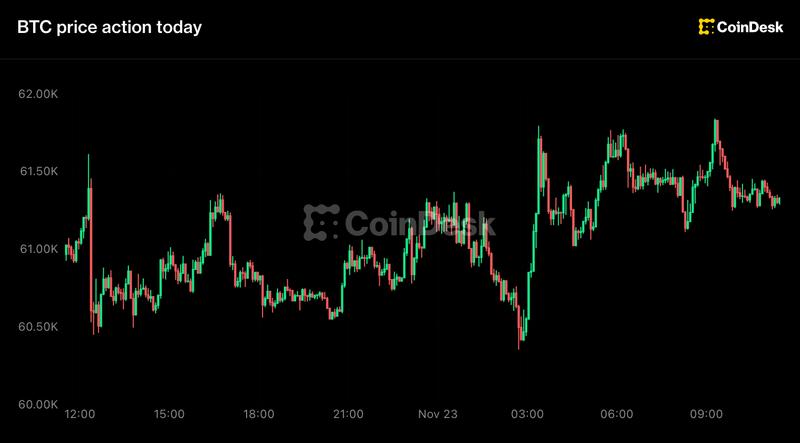
Bitcoin Bounces Back Above $61,000 After Weekend Dive to Two-Year Low
Bitcoin rebounded above $61,000 after a weekend drop to nearly $55,500, its lowest in over two years, as Nasdaq futures rose 3% and Nvidia rallied following an AI-driven stock rout.
Bitcoin Tops $63,000 and Nasdaq Jumps 6% as Nvidia Brings Jensen Huang Back
Bitcoin rose above $63,000 and the Nasdaq jumped 6% after Nvidia's board reinstated Jensen Huang as president, CEO and director, according to CoinDesk.

AI agents are swiping credit cards, and crypto wonders if it got left on read
Cointelegraph reports AI agents are already paying with credit cards, prompting questions about whether crypto, long pitched as machine-friendly money, will find a role in the emerging agent economy.
💬 Comments