OpenAI's chief scientist proposes a speedometer for AI: perplexity

OpenAI chief scientist Jakub Pachocki has published a blog post arguing that perplexity, a measure of how well a model predicts the next token, could serve as the yardstick for setting limits on AI development, TechCrunch reported.
The timing is no accident. Calls to slow AI have grown louder after a former OpenAI and Anthropic researcher said the companies were "gambling with our lives," and Anthropic's IPO filing warned of possible "catastrophic or existential risks to society." Anthropic CEO Dario Amodei then laid out a plan to "pace the frontier," which Sam Altman and Elon Musk seemingly endorsed.
Amodei's plan includes common safety standards and limits on the rate of unchecked AI progress. But a speed limit needs a speedometer, and that is the gap Pachocki is trying to fill. He argues that benchmarks tied to downstream capabilities go stale quickly as models improve, while perplexity has stayed informative. Lower perplexity means better predictions.
His post charts how perplexity in OpenAI's models has fallen since GPT 3.5. He wrote that GPT-4, at roughly 0.91, could use chain-of-thought reasoning productively, which led to modern reasoning models. With losses now below 0.8, he said, transformative capabilities have emerged in areas such as cybersecurity and mathematics.
His proposal: use perplexity as a shared benchmark for general intelligence, and have companies agree not to pass a set threshold until the ability to understand and monitor AI behavior hits a concrete milestone. Altman called the post "the most important thing OpenAI has published in a while." It is a proposal, not an agreement, and no company has committed to anything yet.
Why it matters
If rivals ever agree on a common limit, it could shape how fast the biggest AI labs release new models, and so how quickly AI products and spending evolve. Investors in AI firms, including those eyeing IPOs, should watch whether voluntary pacing becomes a real constraint.
Key points
- Jakub Pachocki proposes perplexity as the common measure of AI progress.
- He says OpenAI's loss fell from about 0.91 at GPT-4 to below 0.8 now.
- Companies would pause at a threshold until AI monitoring reaches a set milestone.
Written by the PixelContent newsroom from public reports. Original reporting: TechCrunch.
Get the news that moves your money
Breaking news, market calls and the weirdest true stories in your inbox. Free.
No spam. Unsubscribe anytime.
More stories

Trump reportedly dialed into Nvidia board meeting, and Jensen Huang is back as CEO
Nvidia reinstated Jensen Huang as CEO after Trump reportedly dialed into a board meeting to back him. Lawmakers still plan hearings, and questions linger over what the White House knew.

CrowdStrike Agrees to Buy Zscaler in $43.9 Billion All-Stock Cybersecurity Mega-Merger
CrowdStrike will buy Zscaler for $43.9 billion in stock, combining device protection with zero-trust security. The companies say it will help customers adopt AI safely. Regulatory approval is needed, with closing expected in about a year.
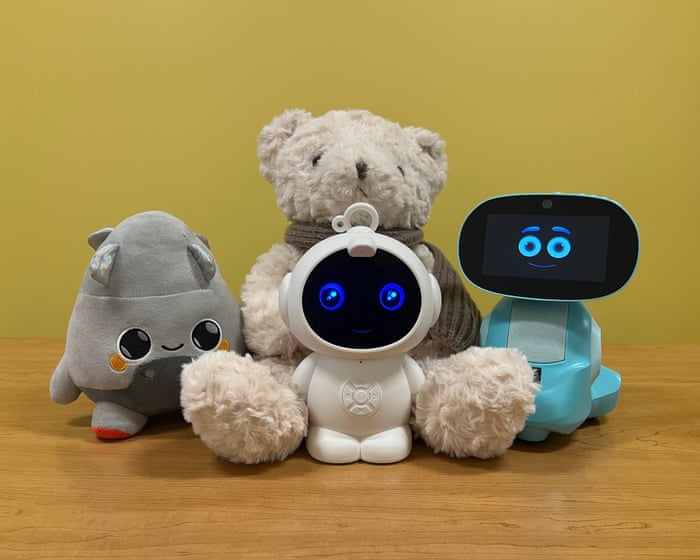
Child safety groups tell Amazon and eBay: pull AI toys until they're proved safe
More than 150 child safety groups and experts across six continents want Amazon and eBay to stop selling AI toys this Christmas until they're proved safe, citing privacy and inappropriate communication concerns.

White House says Trump was 'totally involved' in bringing Jensen Huang back as Nvidia CEO
The White House says Trump was 'totally involved' in Nvidia's decision to reinstate CEO Jensen Huang, and Nvidia says it received input from senior US government levels on national security concerns.

AirPods Pro 3 hit $149, the same price as the weaker AirPods 5
The AirPods Pro 3 dropped to $149 at Amazon and Walmart, 40 percent off their $249 list price. That matches the price of the AirPods 5, a less capable model, according to The Verge.

Meta's Gas Supplier Lobbied the EPA Before It Waived Acid Rain Rules for Data Center Plants
Documents show Williams, a gas supplier to Meta data centers, met EPA officials before the agency recommended exempting data-center power plants from acid rain rules. Critics worry about lost emissions reporting.
💬 Comments