South Korea Plans Wider Crypto Account Freezes and Tighter Limits on Illicit Overseas Transfers

South Korea is proposing new measures to freeze more cryptocurrency accounts and make it harder to move illicit funds abroad, according to CoinDesk. The plan would build on a system that authorities launched in June.
That June system suspends accounts tied to phishing. According to the report, it has already frozen more than 11,500 accounts. The new proposal would stretch the same approach to cover other serious financial crimes, not just phishing.
The material available does not spell out which crimes would be added, how the overseas transfer curbs would work, or when any of this would take effect. Those details will matter a great deal, so it is worth watching for the fine print as the proposal moves forward.
The broader context is familiar. Crypto moves fast and across borders, which makes it attractive to scammers and awkward for regulators. Freezing accounts early is one way to stop stolen money before it vanishes into a foreign exchange. The trade-off is that wider freezing powers raise questions about due process and how quickly innocent users can get access back.
For ordinary crypto holders in South Korea, the practical takeaway is that exchange accounts may face more scrutiny, and transfers abroad could see closer checks if the proposals become rules.
Why it matters
Regulators are shifting from reacting to crypto crime toward freezing assets before they leave the country. That could cut losses for scam victims, but it also puts more pressure on exchanges and raises due-process questions for users caught in the net.
Key points
- South Korea proposes extending crypto account freezes beyond phishing to other serious financial crimes.
- The June phishing system has already frozen more than 11,500 accounts, per CoinDesk.
- The plan also targets illicit transfers abroad, though details were not provided.
Written by the PixelContent newsroom from public reports. Original reporting: CoinDesk.
Get the news that moves your money
Breaking news, market calls and the weirdest true stories in your inbox. Free.
No spam. Unsubscribe anytime.
More stories

Nvidia Brings Jensen Huang Back as CEO, Days After Board Said No Return
Nvidia's board reinstated Jensen Huang as CEO days after ruling out his return, citing input from senior U.S. officials on national security. Shares reportedly surged 26% premarket, according to Decrypt.

Bitcoin bounces 17% off $55K lows as Nvidia-fueled risk rally triggers $500M in liquidations
Bitcoin jumped about 17% from $55,000 lows to $64,500 as risk assets rallied on Nvidia CEO Jensen Huang's reinstatement, while over $500 million in crypto positions were liquidated in four hours, Cointelegraph reported.

Strategy Buys 457 Bitcoin While Spending $212M Buying Back Its Own Preferred Shares
Strategy bought 457 Bitcoin and spent $212 million repurchasing preferred shares, raising its buyback limit to $4 billion and authorizing up to $1 billion to move from its dollar reserve, Cointelegraph reported.
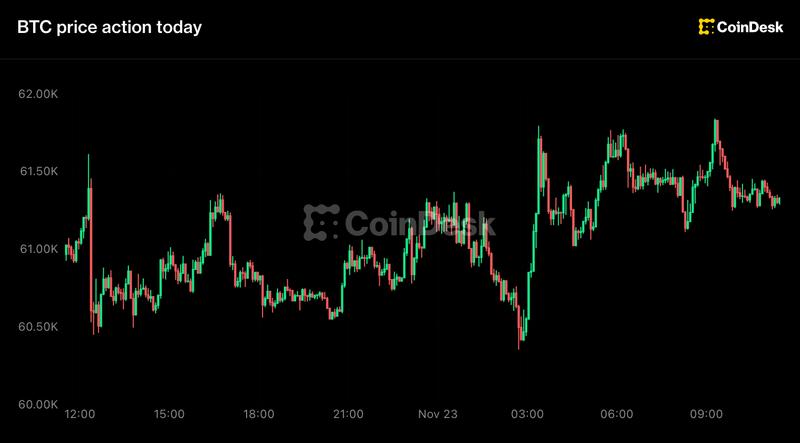
Bitcoin Bounces Back Above $61,000 After Weekend Dive to Two-Year Low
Bitcoin rebounded above $61,000 after a weekend drop to nearly $55,500, its lowest in over two years, as Nasdaq futures rose 3% and Nvidia rallied following an AI-driven stock rout.
Bitcoin Tops $63,000 and Nasdaq Jumps 6% as Nvidia Brings Jensen Huang Back
Bitcoin rose above $63,000 and the Nasdaq jumped 6% after Nvidia's board reinstated Jensen Huang as president, CEO and director, according to CoinDesk.

AI agents are swiping credit cards, and crypto wonders if it got left on read
Cointelegraph reports AI agents are already paying with credit cards, prompting questions about whether crypto, long pitched as machine-friendly money, will find a role in the emerging agent economy.
💬 Comments