Quantum computers could one day come for $72 billion in ETH, researchers warn, and they have a fix

Researchers say Ethereum wallets holding roughly $72 billion worth of ether could be exposed to a future quantum attack, according to a CoinDesk report published on November 23, 2026. The at-risk accounts are those whose public keys are visible on the blockchain.
According to the findings, these accounts hold nearly 55% of all ether that is not locked up in staking. That makes the issue less an obscure corner case and more a question about where most of the network's liquid wealth is sitting.
The concern rests on a well-known idea in cryptography: a sufficiently powerful quantum computer could, in theory, work backward from a visible public key to the private key that controls the funds. Accounts that have exposed their public keys give a would-be attacker a head start. No such machine is described in the material as existing today, so this is a warning about the future rather than a live theft.
The researchers did not stop at the alarm bell. They propose a way to migrate these accounts to quantum-resistant security, which would let holders move to newer protections before the threat becomes practical. The teaser does not detail how the proposal works, so the specifics remain to be seen.
The story highlights a broader challenge for crypto: blockchains are built to be hard to change, yet security assumptions can age. Upgrading a network with this much value at stake takes coordination among developers, wallet providers and ordinary holders, and that kind of herding is famously slower than any quantum processor.
Why it matters
Nearly 55% of non-staked ether sits in accounts that could be targeted if quantum computing advances, so the issue touches the security assumptions behind a huge pool of value. Investors and developers will be watching whether a migration plan gains traction well before any real threat arrives.
Key points
- Accounts with visible public keys hold about $72 billion in ETH.
- They represent nearly 55% of ether outside staking.
- Researchers propose moving them to quantum-resistant security.
Written by the PixelContent newsroom from public reports. Original reporting: CoinDesk.
Get the news that moves your money
Breaking news, market calls and the weirdest true stories in your inbox. Free.
No spam. Unsubscribe anytime.
More stories

Nvidia Brings Jensen Huang Back as CEO, Days After Board Said No Return
Nvidia's board reinstated Jensen Huang as CEO days after ruling out his return, citing input from senior U.S. officials on national security. Shares reportedly surged 26% premarket, according to Decrypt.

Bitcoin bounces 17% off $55K lows as Nvidia-fueled risk rally triggers $500M in liquidations
Bitcoin jumped about 17% from $55,000 lows to $64,500 as risk assets rallied on Nvidia CEO Jensen Huang's reinstatement, while over $500 million in crypto positions were liquidated in four hours, Cointelegraph reported.

Strategy Buys 457 Bitcoin While Spending $212M Buying Back Its Own Preferred Shares
Strategy bought 457 Bitcoin and spent $212 million repurchasing preferred shares, raising its buyback limit to $4 billion and authorizing up to $1 billion to move from its dollar reserve, Cointelegraph reported.
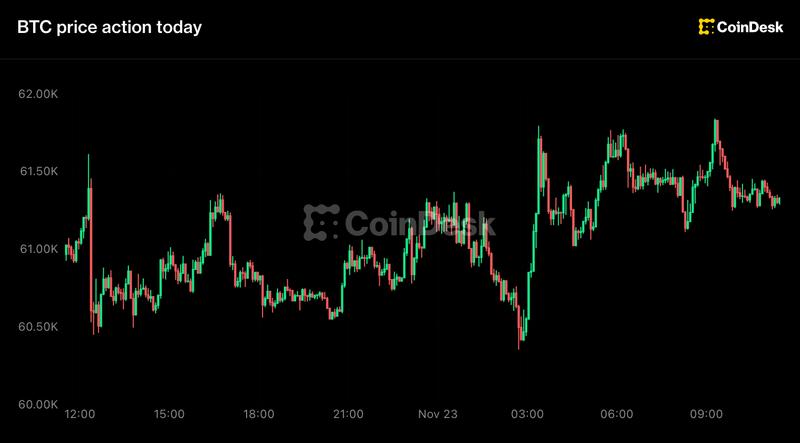
Bitcoin Bounces Back Above $61,000 After Weekend Dive to Two-Year Low
Bitcoin rebounded above $61,000 after a weekend drop to nearly $55,500, its lowest in over two years, as Nasdaq futures rose 3% and Nvidia rallied following an AI-driven stock rout.
Bitcoin Tops $63,000 and Nasdaq Jumps 6% as Nvidia Brings Jensen Huang Back
Bitcoin rose above $63,000 and the Nasdaq jumped 6% after Nvidia's board reinstated Jensen Huang as president, CEO and director, according to CoinDesk.

AI agents are swiping credit cards, and crypto wonders if it got left on read
Cointelegraph reports AI agents are already paying with credit cards, prompting questions about whether crypto, long pitched as machine-friendly money, will find a role in the emerging agent economy.
💬 Comments